
Last updated November 2, 2026
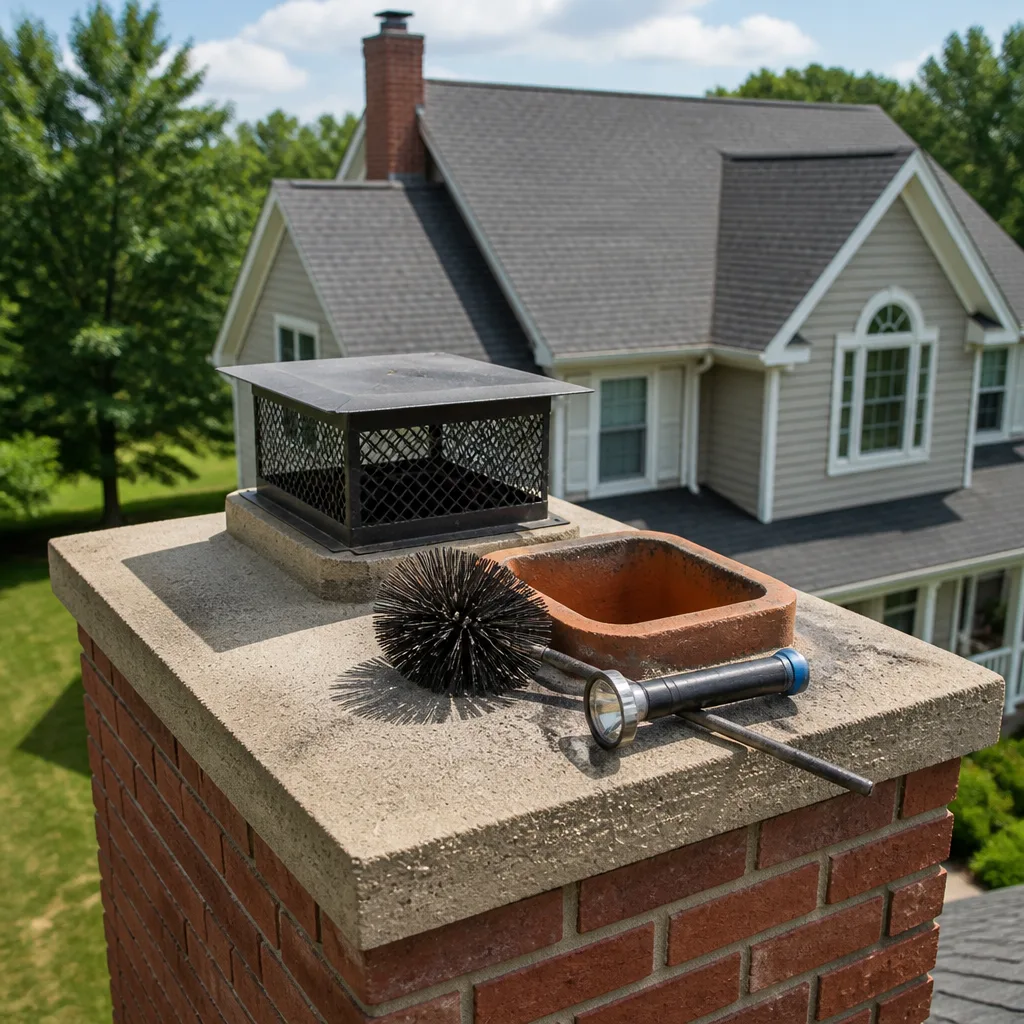 Sweep & inspection
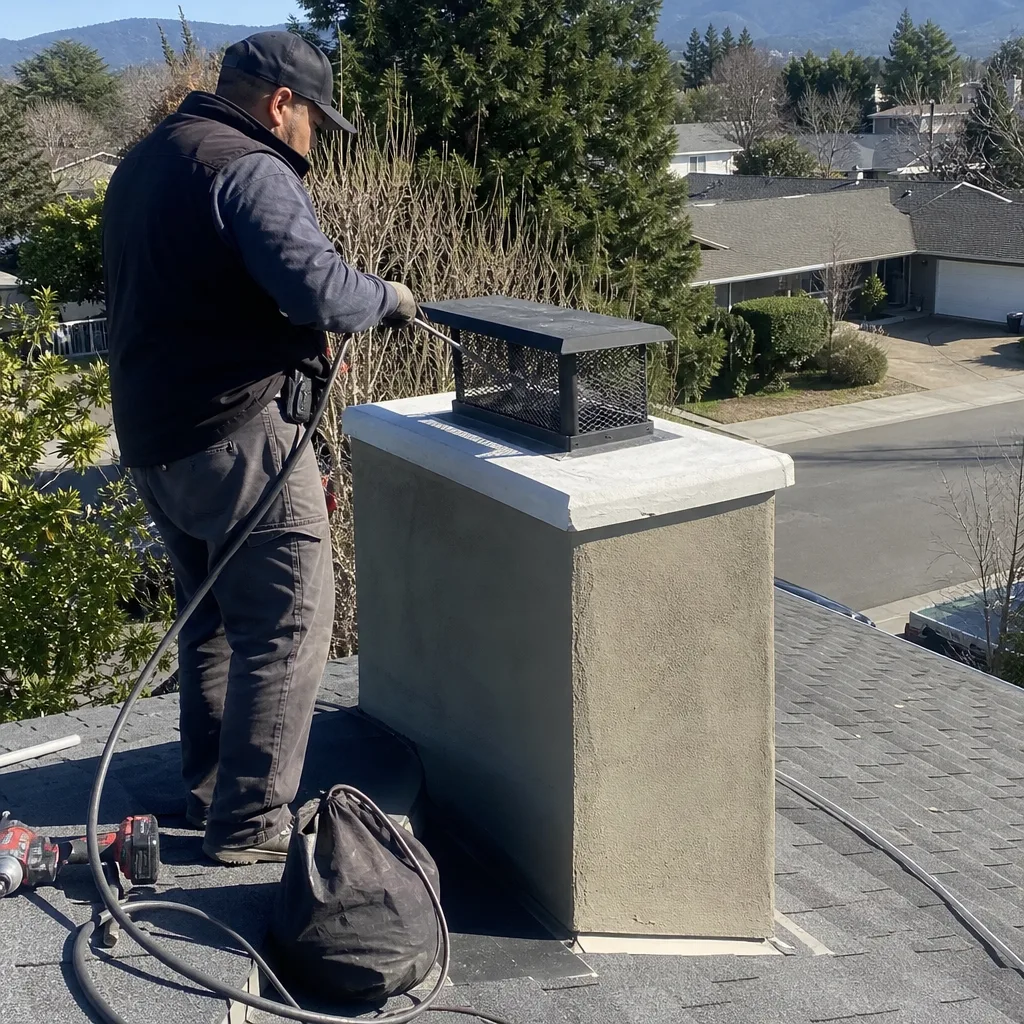
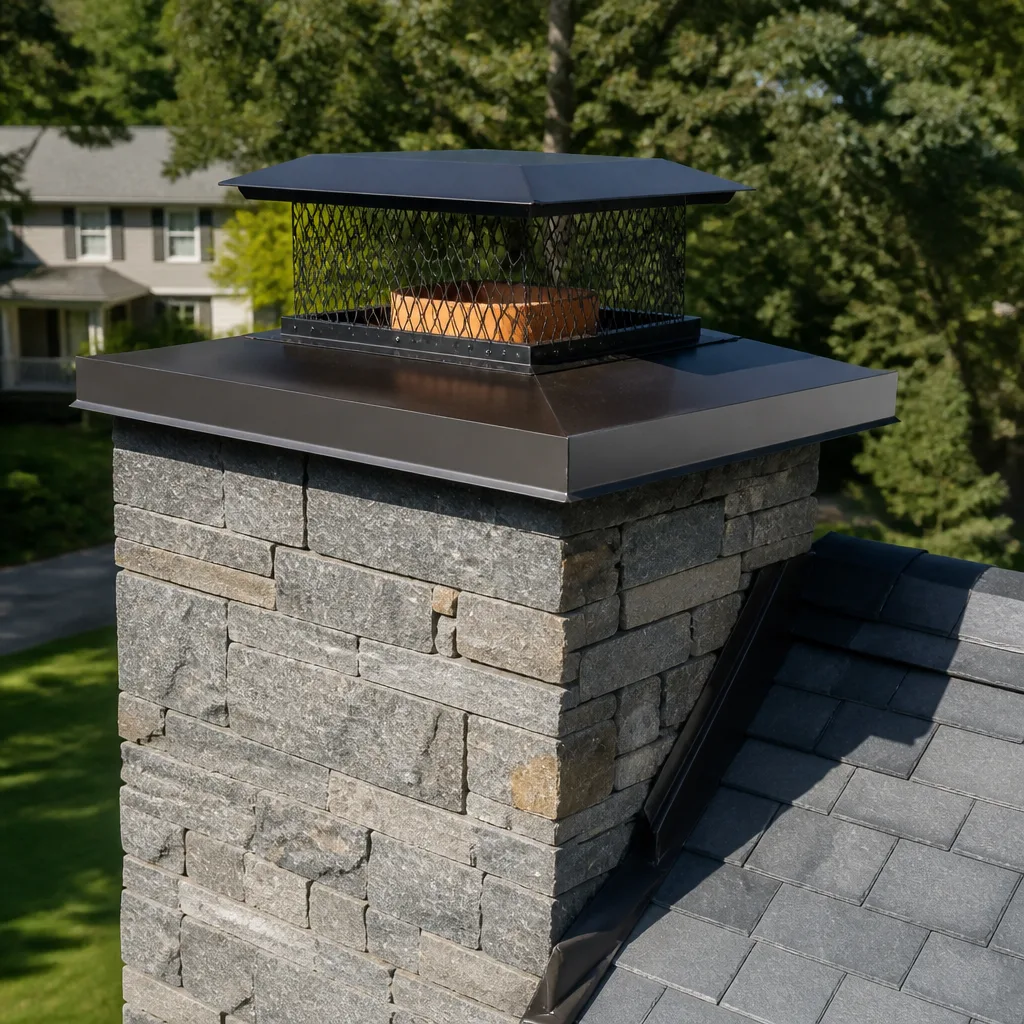 Caps & crowns
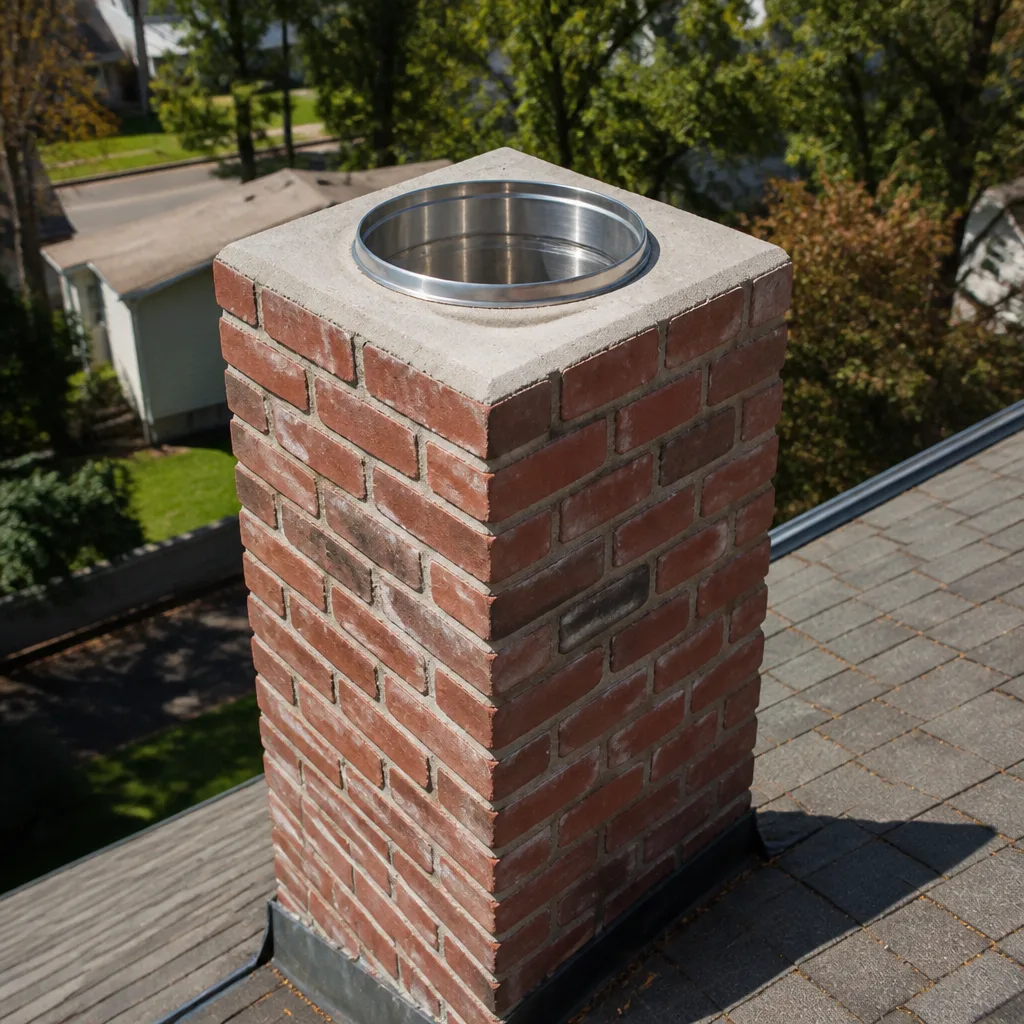 Flue relining
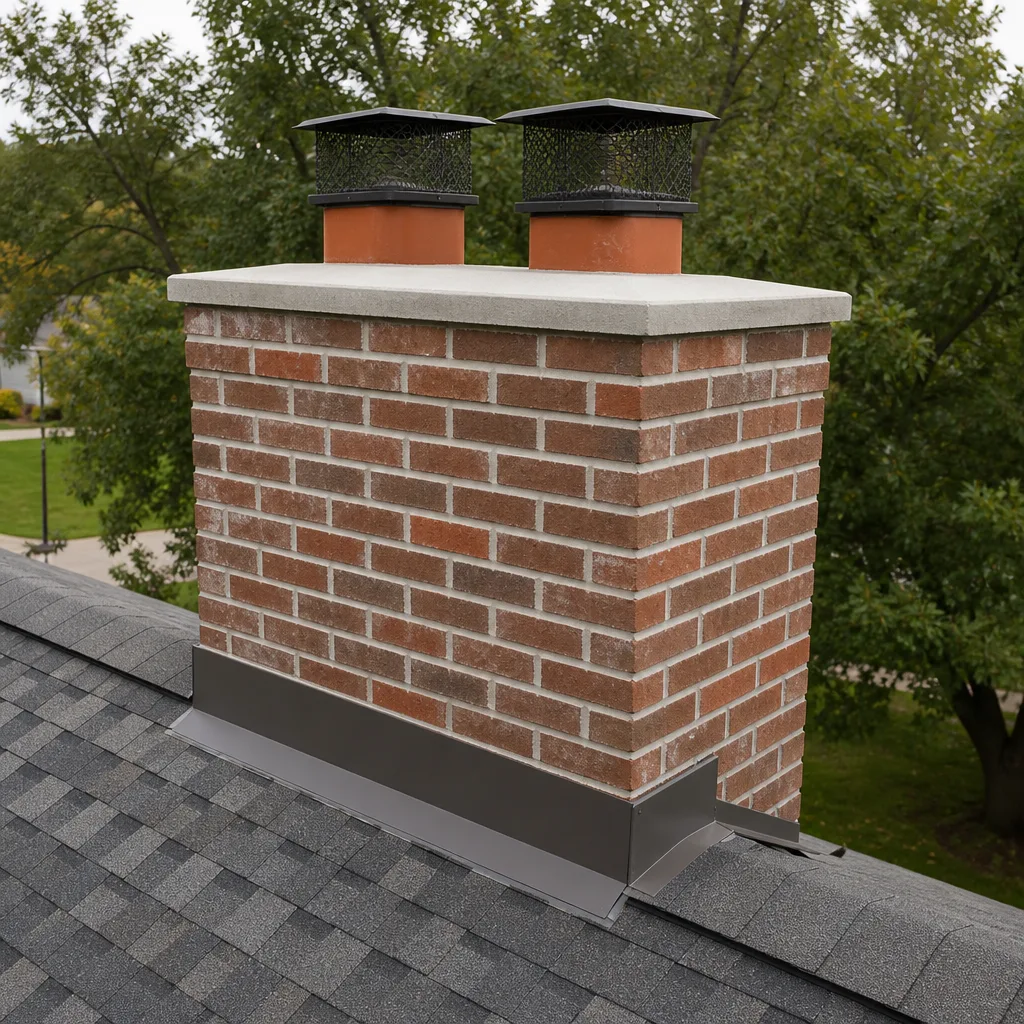 Masonry repair
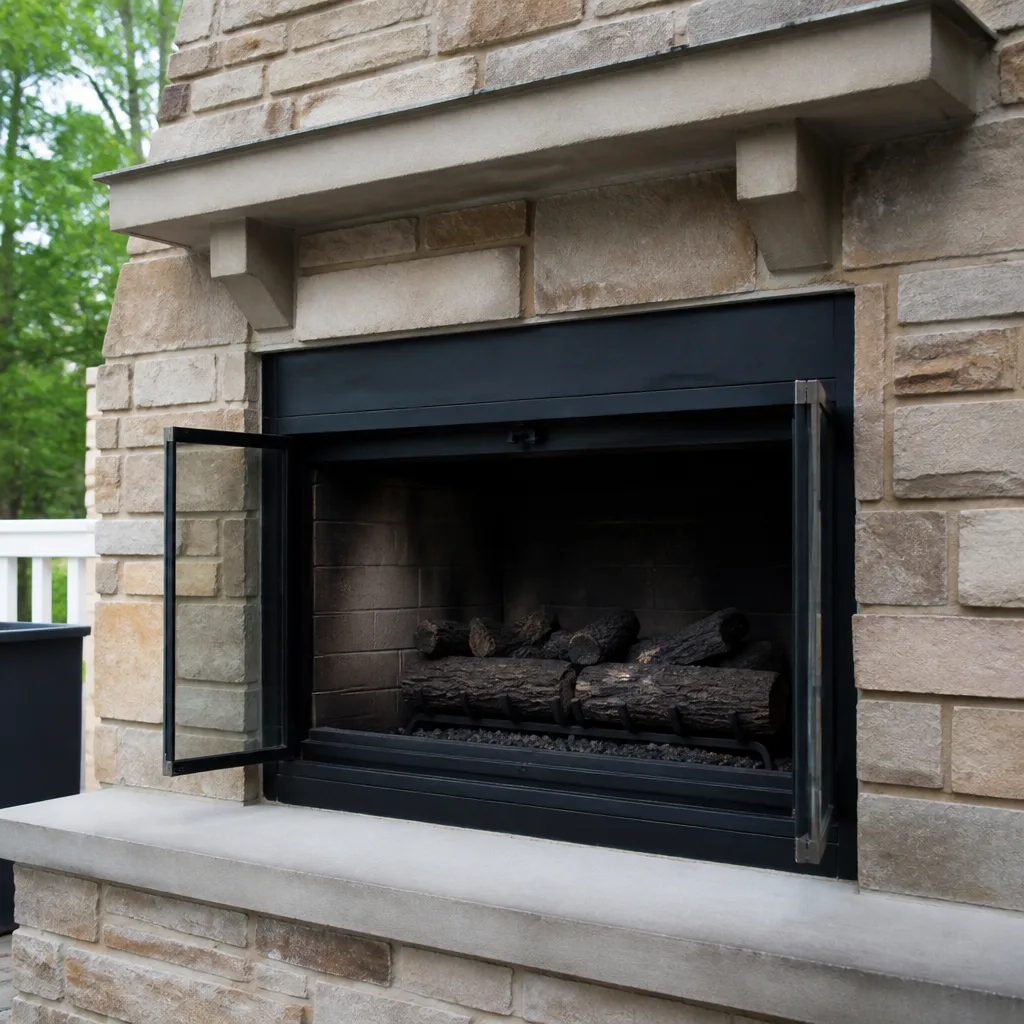 Gas fireplace service
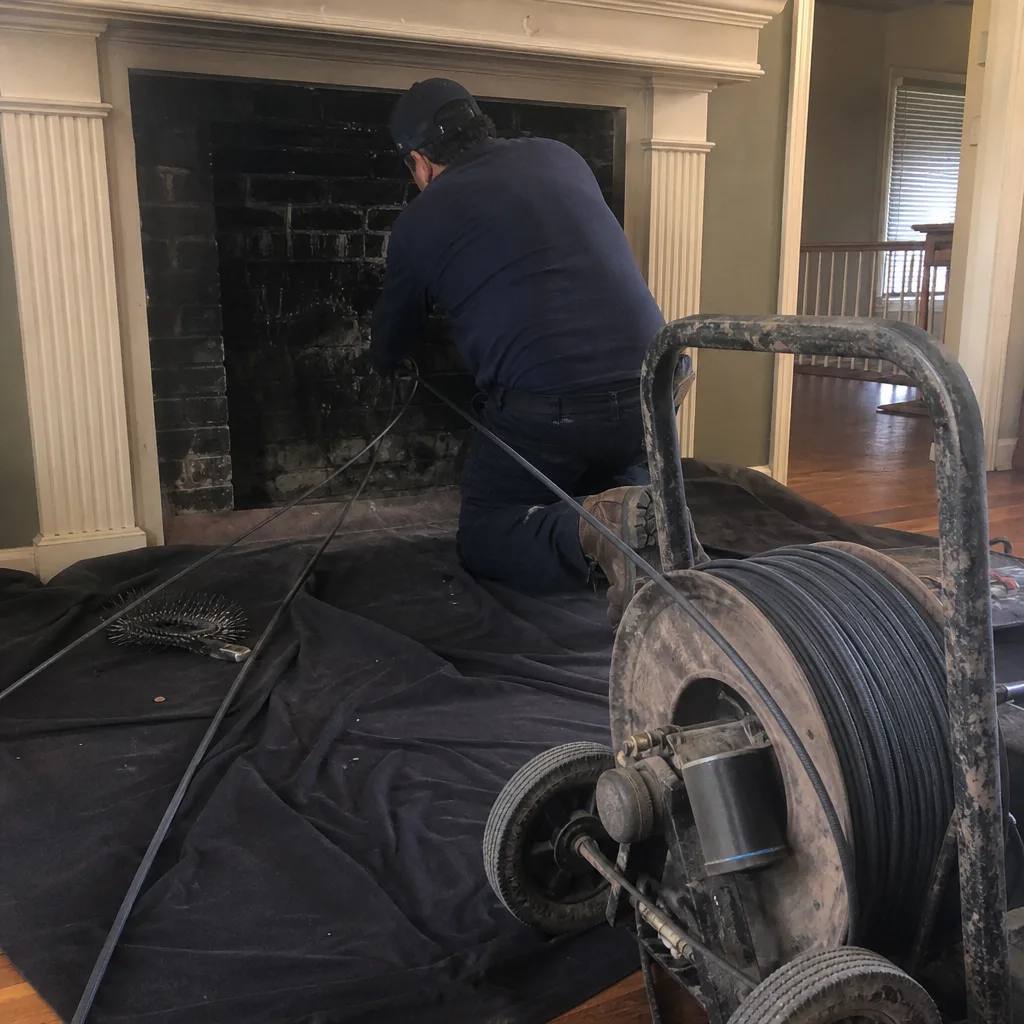
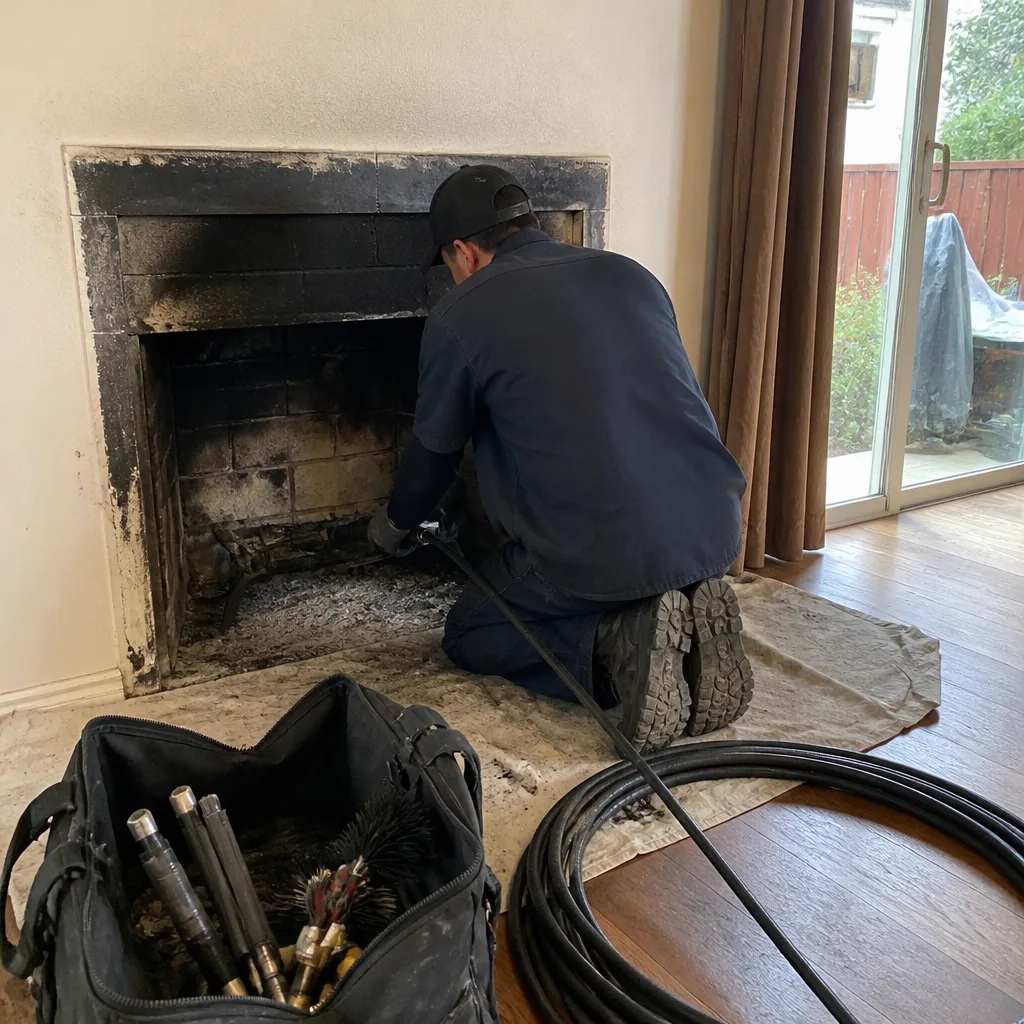
Level 1 sweep and inspection to the NFPA 211 annual standard - flue, crown, cap, and flashing checked and photographed
Chimney sweep logs do not sweep chimneys. They loosen some creosote - which then falls where a brush and vacuum still have to collect it.
Chimney Cleaning Warning Signs: A San Jose Homeowner’s Reference Guide
A white stain running down the exterior of a chimney looks like a cosmetic issue. It’s actually efflorescence, a mineral deposit left behind by water moving through the masonry, and it means the chimney is absorbing and releasing moisture in a cycle that will crack the structure from the inside before any visible deterioration appears on the surface. This guide connects what you see to what it actually means, so you know whether to schedule a sweep, arrange a repair, or stop using the fireplace entirely. For Chimney Sweep Troubleshooting: Common Problems and How to Fix Them, see our dedicated guide. San Jose homeowners face a particular set of conditions: adobe clay soils that shift with winter rains, marine-layer humidity that interacts with creosote, and a housing stock where many fireplaces date back to the 1950s and 60s. By the time you finish reading, you’ll have a framework for triaging every common warning sign, from harmless to urgent.
Quick Answer
The most common chimney warning signs that require attention in San Jose are white mineral staining on exterior brick (efflorescence), a rusted damper assembly, smoke entering the living space instead of venting upward, crumbling brick faces, a persistent campfire odor in summer, and dark staining on the ceiling or wall near the fireplace. A crack in the flue liner or a chimney fire history means stop using the fireplace immediately and call a specialist. Most other signs can be addressed with a Level 2 camera inspection and standard sweep, which we recommend booking before the first fall fire.
Styles & brands we work with
- Sweep & inspection
- Caps & crowns
- Flue relining
- Masonry repair
- Gas fireplace service
Table of Contents
- White Staining on the Exterior: Efflorescence, Not “Old Brick”
- Rusted Damper and Water in the Firebox
- Smoke Rollout: Draft Problem or Blockage?
- Crumbling Brick and Missing Mortar: Normal Aging vs. Active Deterioration
- Odor Patterns and What They Diagnose
- Dark Ceiling Near the Flue: A Chimney Fire Warning Sign
- Stop, Schedule, or Monitor: A Triage Framework
- Common Mistakes to Avoid
- When to Call a Professional
- Frequently Asked Questions
White Staining on the Exterior: Efflorescence, Not “Old Brick”
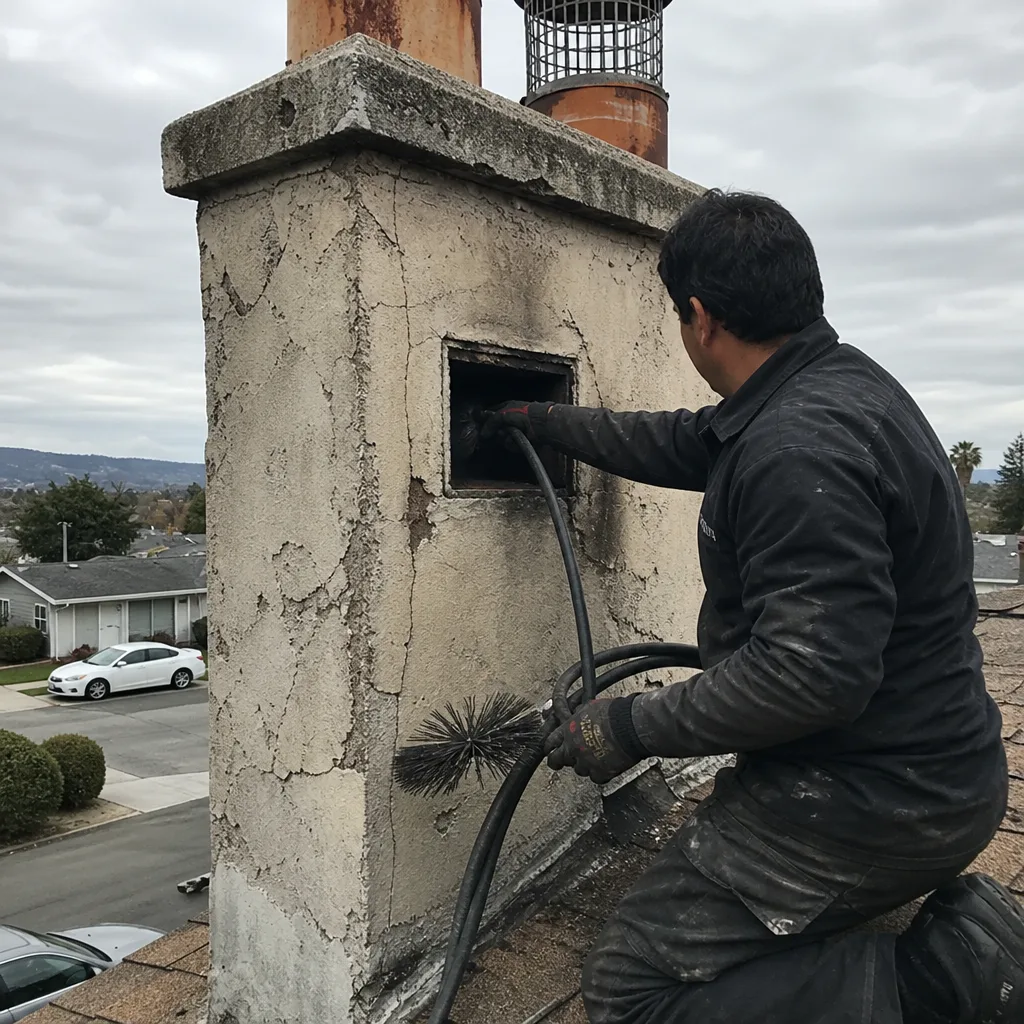
Efflorescence is the most misread warning sign on San Jose chimneys. It appears as a chalky white or grayish film that follows the mortar lines or spreads in blotches across brick faces. The mechanism is straightforward: rainwater or condensation enters the masonry through a failed cap, cracked crown, or porous mortar joint, dissolves mineral salts inside the brick, and carries them to the surface. When the water evaporates, the salts remain. This is not the same as paint fading or “old brick character.” It is evidence that water is traversing the entire masonry assembly. In our experience, San Jose homeowners in neighborhoods like Willow Glen and Almaden Valley see accelerated efflorescence after wet winters, when repeated moisture cycles push deposits outward.
The severity question is how long the water intrusion has been active. Early efflorescence presents as a uniform hazy film that brushes off relatively easily. Advanced efflorescence forms crusty, crystalline deposits that reappear even after brushing. That recurrence signals ongoing moisture movement, not a one-time soak from a heavy storm. The underlying risk is not the salt itself. It’s the freeze-thaw or wet-dry cycle working on the brick from inside. San Jose rarely sees hard freezes in the valley floor, but the thermal stress from daily temperature swings combined with mineral expansion will eventually crack brick faces and mortar beds. If the staining appears on an interior wall adjacent to the chimney chase, that is a different problem: water has penetrated far enough to reach the wall cavity, and the ceiling and framing are at risk.
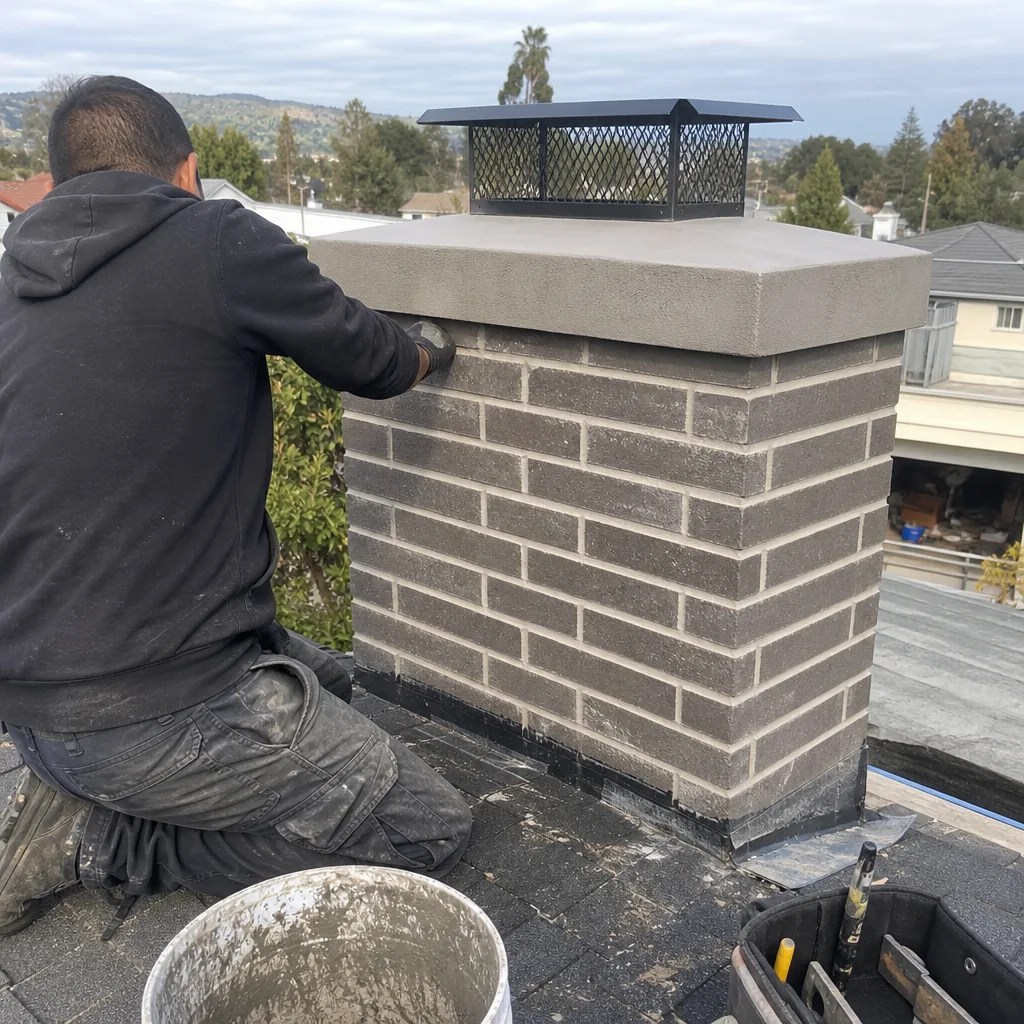
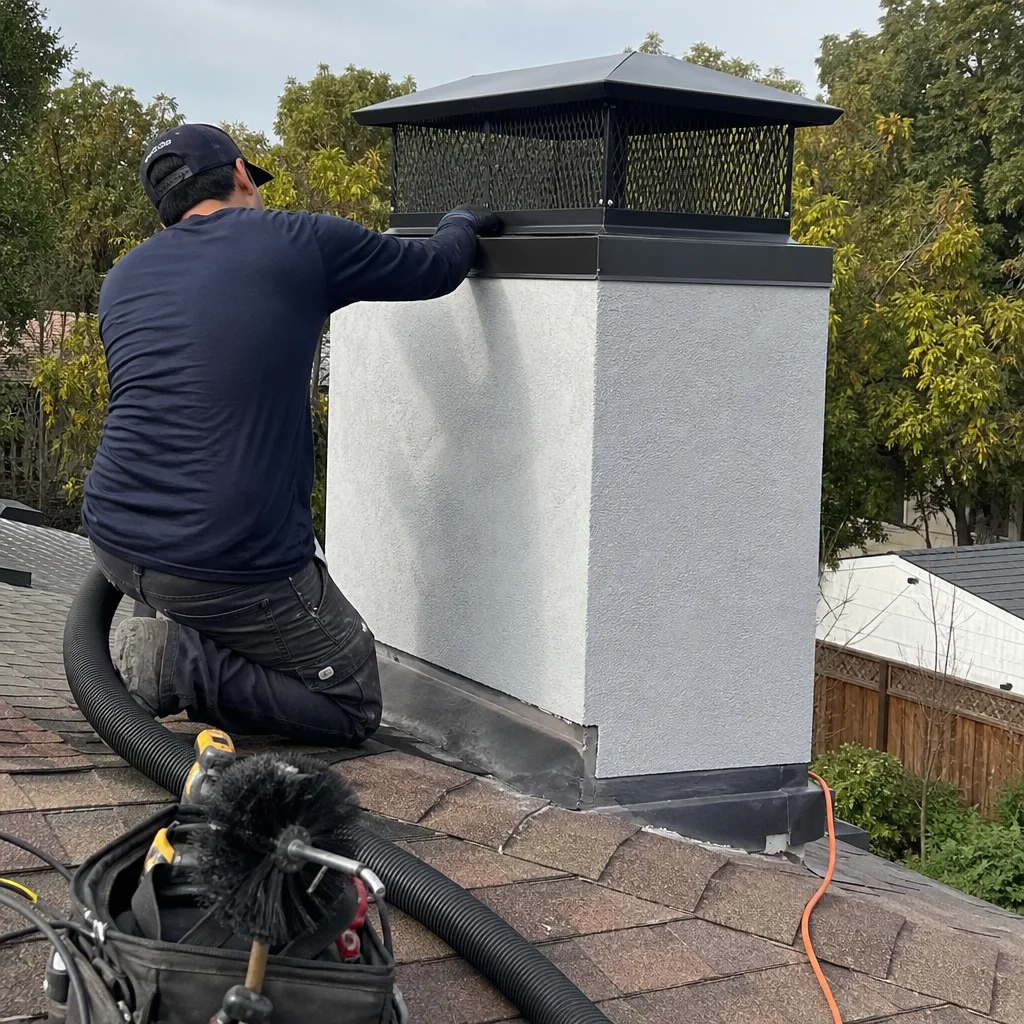
Our first move on a call for efflorescence is not to scrub the chimney. We inspect the cap and crown first, because at Chimney Repair in Blossom Valley we look at the water entry point, not just the symptom. A damaged cap on an otherwise sound chimney is a straightforward replacement with a Copperfield or Gelco cap that keeps rain out for years. A failed crown with cracked mortar is a more involved repair, but still routine. The brick staining is just the messenger. If the water source is not addressed, the stains will return and the underlying damage will accelerate.
Rusted Damper and Water in the Firebox
Open the damper and look at the metal assembly. If you see rust flaking, a reddish-orange film, or seized hinges that won’t move smoothly, water has been entering the flue with enough volume to pool or condense on the damper plate. A damper is designed to open and close against smoke, not against water intrusion. Rust on the damper tells you that the chimney is channeling rain directly down the flue opening, which means the cap is either absent, undersized, or installed incorrectly.
There’s a difference between light surface rust from years of humidity and active rust from ongoing water entry. Light rust on a 20-year-old damper in a home near the Santa Cruz Mountains is common and usually benign. Active rust with visible water beads after a rain, a damp smell in the firebox, or a puddle at the base means the water path is still active. San Jose’s winter rain pattern delivers intermittent downpours, so a chimney that leaks during a heavy storm may dry completely between events, hiding the source. We’ve seen this repeatedly in older Cambrian and Santa Teresa homes, where homeowners assume the issue resolved itself in summer.
The fix depends on the water source. A missing or damaged cap on a standard terra cotta flue is usually a cap replacement using a Copperfield or Olympia Chimney product sized to the flue. A chimney with an oversized flue that was never properly terminated may channel rain even with a cap present. We also check that the flue liner terminates at the correct height above the crown. If the damper itself has rusted through or the frame is loose, the repair is not just a new cap: the damper assembly may need to be replaced or converted to a top-sealing damper, which is a more effective barrier against both water and heated air escaping the home. This is a case where a Chimney Sweep in Blossom Valley with repair capability can diagnose and fix in a single visit, rather than sending you to a separate mason.
Smoke Rollout: Draft Problem or Blockage?
Smoke rollout means smoke is spilling into the room instead of being drawn up the flue. The two words that matter are “draft” and “blockage.” They sound similar, present similarly, but require different interventions and carry different levels of urgency. A draft problem occurs when the chimney cannot establish or maintain negative pressure: the flue is too short, the home is too tightly sealed, an exhaust fan is competing with the chimney, or the outside air temperature is too warm to create a thermal stack effect. A blockage problem occurs when something is physically in the flue: a bird or squirrel nest, creosote accumulation, a failed flue liner, or a collapsed masonry section.
Here’s the diagnostic difference. A draft problem is often intermittent and weather-dependent. The chimney works fine on cold nights but spills smoke on mild days, or only when the kitchen exhaust fan is running. A blockage problem is consistent and progressive. The chimney gets harder to light over weeks or months, smoke backs up into the room every time, and the fire burns with an unusual roar or produces visible smoke from the chimney cap. San Jose’s mild climate means many draft problems appear in the shoulder seasons, when the temperature difference between the firebox and the outside air is small. We tell homeowners to try opening a nearby window before lighting: if that fixes the smoke, you’re dealing with a draft issue, not a blockage.
Neither condition should be ignored, but a blockage is the urgent one. Smoke that cannot exit the flue is being pushed into your living space, along with carbon monoxide. We’ve opened chimneys in San Jose where birds had built nests three feet deep in the flue over a single spring nesting season, and the homeowner had been slowly adapting to the smoke, adding fresh air, opening doors. The creosote and nesting material are also a fire load sitting directly above the firebox. A draft problem can often be resolved with a chimney cap change, damper adjustment, or a smoke guard, but exact solutions depend on a proper diagnosis. We inspect the flue with a camera and check the termination height and cap condition, because we’ve seen chimneys where a partial cap blockage was causing the same symptoms.
Crumbling Brick and Missing Mortar: Normal Aging vs. Active Deterioration
Spalling is the technical term for brick faces popping off, leaving pitted, recessed surfaces. Missing mortar is called a voided joint. Both are common in San Jose’s older housing stock, particularly in homes built before 1970, and both can be either stable and cosmetic or actively progressing toward structural failure. The distinction is not the presence of damage. It’s the rate and pattern of material loss.
Stable spalling is old damage that has not moved in years. The brick faces are missing, the edges are weathered and rounded, and the mortar is solid when you press it with a screwdriver. Active spalling is material actively separating from the brick. The edges of the spalled area are sharp, the brick face feels loose, and new flakes or dust appear on the roof or ground after weather events. The same logic applies to mortar: if the joints are creating a constant trickle of sand at the chimney base, that is new material loss. If the joints are recessed but dusty and the surrounding mortar is hard, that is old weathering. We ask San Jose homeowners one question: has this gotten worse in the last year? If the answer is yes, the moisture cycle is still active and the damage will continue.
The reason this matters is cost. A chimney with stable cosmetic spalling can be monitored with an annual visual check and a waterproofing treatment once the water source is confirmed to be gone. A chimney with active spalling needs the water source eliminated and the masonry addressed, because the structural integrity of the entire stack is degrading. Our crew repairs spalled brick and repoints voided mortar, then applies a masonry sealer appropriate for the brick’s vapor-permeability. Waterproofing the wrong way, sealing the brick so it cannot breathe, actually accelerates internal damage, which is a recurring issue we see on San Jose chimneys sealed with non-breathable coatings.
Odor Patterns and What They Diagnose
Chimney odors are a diagnostic tool, not just a nuisance. The timing and character of the smell tell you what’s happening inside the flue. A campfire smell in summer, when the fireplace has not been used in months, is creosote interacting with humidity. Creosote is hygroscopic: it absorbs moisture from the air, releases volatile organic compounds, and the smell presses down into the living space through the open damper or gaps around the damper frame. San Jose’s marine layer and winter humidity make this a familiar problem in homes near Los Gatos Creek or along the east foothills. The smell is not a fire hazard by itself, but it confirms a creosote load that has not been cleaned.
A sulfur or rotten-egg smell in a home with a gas fireplace is a different emergency entirely. Gas fireplaces do not produce creosote. A sulfurous odor means incomplete combustion or a gas leak, either from the fireplace itself, the supply line, or the venting system. This is not a scheduled-sweep situation. Shut off the gas to the fireplace, ventilate the room, and call both your utility provider and a specialist who can inspect the venting system. We have tested chimneys in San Jose where the homeowner assumed the smell was a dead animal in the flue, and the actual issue was a cracked heat exchanger in the gas insert. Do not wait on this one.
Other odor signatures: a musty, damp smell means water pooling in the firebox or the smoke shelf, usually from the rain entry problem discussed above. An animal smell, sharp and organic, means nesting activity in the flue, which is both a blockage and a fire load. A burned-plastic smell after a fire means foreign material in the flue has ignited or is smoldering. Each of these maps to a specific condition. The next step is not to mask the odor with air freshener or to keep the damper shut and ignore it. The damper cannot seal tightly enough to keep combustion gases, moisture vapor, and creosote emissions from entering the home.
Dark Ceiling Near the Flue: A Chimney Fire Warning Sign
Dark staining on the ceiling or wall adjacent to the chimney chase, or on the interior surface of the chimney breast, is one of the signs we look for during a sweeping inspection because it can indicate a past chimney fire. A chimney fire burns hot enough to crack flue tiles, melt mortar, and transfer enough heat through the masonry to scorch studs, insulation, and drywall in the surrounding wall assembly. The staining may be subtle: a shadowed area, a yellowing patch, or a localized area where paint has started to peel. But if it tracks along the path of the flue, it is not a cosmetic issue.
The mechanical sequence: creosote ignites inside the flue, the flue temperature spikes rapidly, the terra cotta liner cracks from thermal shock, and the fire is either extinguished or dies out. The liner is now compromised. Combustion gases, embers, and future chimney fire heat have a direct path to the combustible framing. The damage is not visible from the exterior of the chimney. It lives between the flue and the living space, inside the wall cavity. San Jose code enforcement and home inspectors see this often in older homes where a chimney fire was never reported and the liner was never inspected afterward.
If you see dark staining near the flue and you do not know the chimney’s history, stop using the fireplace. The next step is a camera inspection of the flue liner. A cracked or missing terra cotta liner is addressed either with a full relining or, when the tile has shifted and is otherwise intact, with a HeatShield resurfacing system that installs a continuous ceramic liner inside the damaged tile. At Chimney Sweep in Blossom Valley, we use HeatShield, a professional chimney-trade product, not an off-the-shelf insert. The ceiling staining is the visible end of a hidden problem, and the camera inspection is how we find the rest of it.
Stop, Schedule, or Monitor: A Triage Framework
Every warning sign in this guide falls into one of three categories. Here is the framework, in order of what to do this week. For a printable version, see our Chimney Sweep Maintenance Checklist for San Jose Homeowners.
Stop using the fireplace immediately
- Dark staining or scorched areas on the ceiling or wall along the flue path.
- Smoke entering the living space on every fire, regardless of weather conditions.
- A sulfur or rotten-egg smell in a gas fireplace.
- Visible cracked or missing flue tiles during an inspection.
- A known chimney fire in the past, with no subsequent liner inspection.
Schedule an inspection and sweep, but the fireplace can sit cold
- Efflorescence that is new or increasing.
- A rusted damper with active water entry.
- Intermittent smoke rollout that responds to opening a window.
- Active spalling or new mortar dust at the chimney base.
- A persistent campfire smell in summer.
Monitor, with a plan
- Stable spalling that has not changed in two years, with no water entry.
- Light surface rust on a damper in a dry climate with no water beads.
- Faint efflorescence that appeared after one heavy storm and has not returned.
- Minor mortar recession with hard joints and no sand accumulation.
Any of these watch-items shifts into the schedule category if the condition changes. Our advice for San Jose homeowners is to take photos of the chimney exterior and interior dampers twice a year, in spring and fall. A visual record that proves a crack is not growing or a stain is not spreading is worth more than a one-time inspection. And the cost of an inspection is trivial compared to a liner replacement.
Common Mistakes to Avoid
- Brushing off efflorescence and calling it done. The staining will return as long as water is entering. A stiff brush removes the deposit but not the water path, and every cycle pushes the mineral salts deeper into the brick.
- Sealing the exterior brick without first eliminating the water entry. A non-breathable sealer traps moisture inside the masonry and accelerates spalling. The correct order is: fix the water source, allow the brick to dry, then apply a vapor-permeable sealant appropriate for the brick.
- Assuming a smoky fireplace is just “how it is.” Smoke rollout is not a personality trait. It’s a draft or blockage problem, and both have fixes. A homeowner who adapts to the smoke is adapting to carbon monoxide exposure.
- Ignoring a summer campfire smell. The smell means creosote is present and humidifying. It does not burn off on its own, and it will contribute to the next season’s fire load.
- Using a hardware-store chimney cleaning log as a substitute for a sweep. These products loosen some creosote but do not remove it, and they cannot inspect the flue or damper. They’re a supplemental tool, not a service.
- Waiting until fall to book a sweep in San Jose. The trade is seasonal, and October and November are booked weeks out. Spring and summer slots are wider open, and the work is identical.
- Treating the dryer vent as a separate concern from the chimney. Both are exhaust systems moving heated air and lint or creosote out of the home. A clogged Dryer Vent Cleaning in Blossom Valley is the same failure mode as a creosote-loaded chimney: the exhaust cannot exit, and the heat backs up.
When to Call a Professional
Call a chimney specialist when any of the stop or schedule conditions in the triage framework are present. More specifically: you should not operate a fireplace if you have smoke rollout, dark staining along the flue, a sulfur smell in a gas unit, or visible water entry. A camera inspection is the definitive answer, and it is not expensive. Chimney Sweep Blossom Valley offers free estimates in San Jose, call (833) 593-5179. We also recommend a sweep any time creosote has reached 1/8 inch of accumulation, which in our experience is roughly after one to two cords of wood burned in a season, or every 30 to 40 fires. For homes that burn occasionally, an annual inspection is the baseline.
Frequently Asked Questions
A standard chimney sweep in San Jose typically runs between $180 and $340, depending on the height of the chimney, the amount of creosote, and whether the flue has been recently cleaned. A sweep with a full camera inspection may add $100 to $200. Repair work like cap replacement, crown repair, or damper replacement is quoted separately and always after we show you the camera footage. Call (833) 593-5179 for an exact quote on your chimney, the estimate is free.
Sweep the chimney once per year if you burn more than a cord of wood per season. For occasional fireplaces used a handful of times each winter, an annual camera inspection and a sweep every other year may be sufficient. The National Fire Protection Association standard is that a chimney should be swept when creosote accumulation reaches 1/8 inch, and a camera inspection is the only way to measure that accurately.
Creosote builds up on the flue walls, narrows the draft opening, and becomes the fuel source for a chimney fire. Skipping one year usually means a heavier cleaning the next year. Skipping five years in a heavily used fireplace means a flue that is ready to ignite, a damper that may be partially blocked, and a liner that may have cracked without anyone knowing. The sweep is the cheap part of the system.
You should never accept a liner recommendation without seeing camera footage of the damage. A cracked or shifted terra cotta liner cannot be safely used, and the repair options depend on the extent and location of the damage. HeatShield resurfacing repairs cracked tiles from the inside without a full relining, which is a cost-saving option we offer because the flue is often repairable. If the liner is collapsed or the oval is too distorted, a full relining is the only correct answer. Ask any contractor to show you the video. We show it as standard practice.
Creosote in the flue is absorbing humidity from the air and releasing the smoky odor back into the home. It is a humid-weather phenomenon, and in San Jose it is most common during the marine-layer months and after winter rains. A sweep removes the creosote, and a top-sealing damper or properly adjusted throat damper reduces the odor pathway. Cleaning the flue is the first move.
Gas fireplaces do not produce creosote, but they produce acidic combustion byproducts, and the venting system can corrode, crack, or become blocked by animal nesting just like a wood flue. The annual inspection is typically shorter and the sweep may be a less involved process, but the venting system still needs to be checked. A sulfur smell in a gas fireplace is a combustion or gas supply issue, not a schedule-a-sweep issue.
The Bottom Line
Chimney warning signs are not random: each one maps to a specific condition, and reading them correctly means knowing whether to stop, schedule, or monitor. Efflorescence is water entry, not old brick. A rusted damper is a missing or failed cap. Smoke rollout is either a draft problem or a blockage, and the two are distinguishable. Spalling brick means the moisture cycle is still active. Odor patterns diagnose creosote, gas, animal, or water issues. The flue liner is the component you cannot see, and it is the one that turns a cosmetic problem into a house fire. In San Jose, the climate, the soil, and the age of the housing stock all conspire to make chimney maintenance a year-round concern. The system deserves the same attention as the roof and the foundation. It’s part of the same envelope. Browse our more guides & resources for year-round chimney care.
Chimney Sweep Blossom Valley home services San Jose with sweeps, repairs, and dryer vent cleaning under one roof. If you have a warning sign you’re not sure how to read, call (833) 593-5179 and we’ll talk you through it.
Written by the team at Chimney Sweep Blossom Valley, serving San Jose since 2014.
See the difference
 Before
 After
 Before
 After
 Before
 After